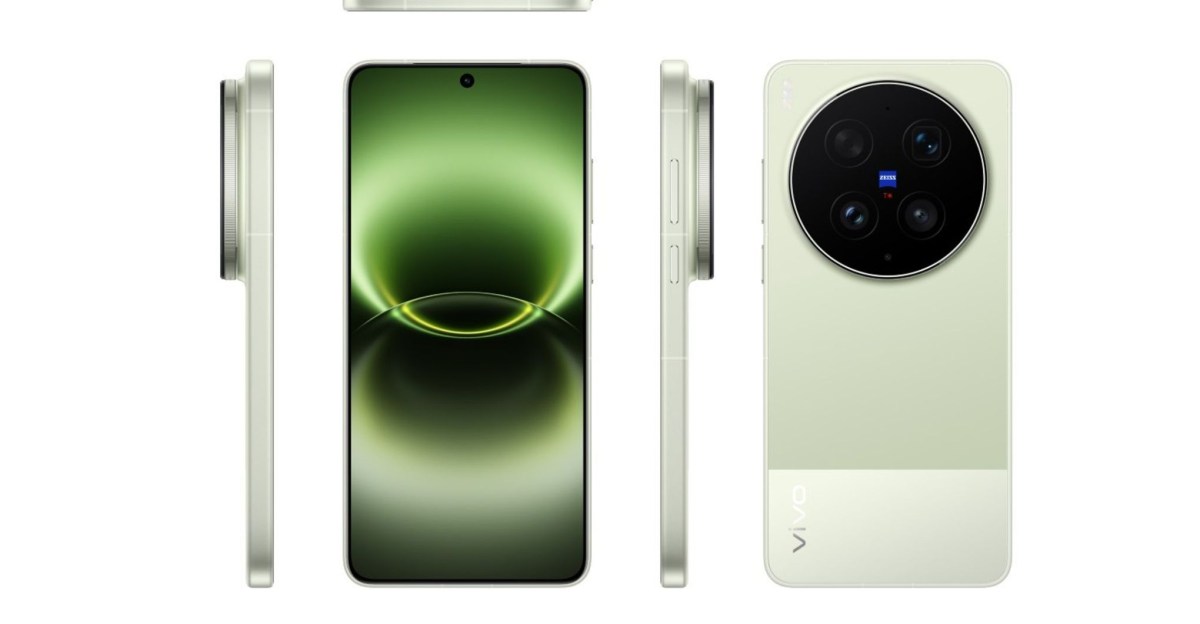
Vivo's newest X-series phones make one thing very clear: this company believes camera hardware still moves the needle. The X300 Ultra — launched in China and promised for global release later this year — is less a phone and more a portable studio, while the X300s trims a few edges to sit between the regular X300 and the Pro.
Cameras take center stage
The headline here is the X300 Ultra's main sensor: a 200MP Sony LYTIA 901 that Vivo describes as nearly 1-inch in size (1/1.12-inch). Vivo kept the sensible 35mm 'documentary' focal length for the primary camera but quadrupled the resolution versus last year, pairing the big sensor with new 1G+6P lens coatings that Vivo says cut reflectivity by 20 percent. Optical image stabilization is CIPA 6.5 rated for that module.
The secondary kit reads like a photographer's wishlist: a 14mm ultra-wide (the same large 1/1.28-inch sensor the X200 Ultra used) and an 85mm telephoto built around a 200MP Samsung ISOCELL HP0 1/1.4-inch imager. Vivo touts much faster autofocus on the HP0, lower power draw, and what it calls 3° gimbal-grade OIS with a CIPA 7.0 rating. To extend reach, Vivo also launched two teleconverters — the large 'Cannon 400' (400mm, 17.4x) and a compact 'Lipstick 200' (200mm, 8.7x) — plus a Photography Grip Kit for more serious shoots.
Video tools have been upgraded too: multi-focal 4K at 120fps in 10-bit Log, full-focal-length OIS across lenses, 3D LUT import support, and compatibility with the ACES post-production workflow. Vivo also introduced a 50MP True Color Lens that samples 12 spectral channels to inform a new color pipeline, and a Photography App with a 3D LUT library for different looks.
Specs and pragmatic bits
Under the hood the X300 Ultra runs Qualcomm's Snapdragon 8 Elite Gen 5, with 12GB or 16GB of RAM and storage up to 1TB. The display is a 6.82-inch Ultra XDR AMOLED at 3168 x 1440 and a 1–144Hz adaptive refresh range. Battery capacity sits at 6,600mAh with 100W wired and 40W wireless charging.
Vivo is keeping the overall design familiar to the X200 Ultra, but ditching a capacitive camera button for a cleaner side profile. The X300 Ultra ships in Green, Silver, and Black; configurations include 12/256GB up to 16/1TB (certain top models add satellite communication support). Pricing starts at 6,999 CNY in China (around $1,012), though global pricing will be higher.
The X300s is a more conventional alternative. It swaps the Snapdragon for MediaTek's Dimensity 9500, keeps a large 6.78-inch 144Hz LTPO OLED, and still leans heavily on imaging — a 200MP main (Samsung HPB 1/1.4-inch in this case), a 50MP telephoto, and a 50MP ultra-wide. The X300s uses a smaller 7,100mAh battery with 90W wired and 40W wireless charging, gains USB-C 3.2 Gen 1, and carries IP68/IP69 durability. Vivo priced the X300s starting at 5,000 CNY for 12/256GB in China and offers a Photographer Kit option that bumps the package price.
Why this matters — and who it's for
Vivo is doubling down on hardware to win photographers and videographers who want tactile control and optical reach without carrying a mirrorless camera. The X300 Ultra's sensor sizes, teleconverter ecosystem, and pro video workflows suggest Vivo expects creators to do more than post to social — it wants filmmakers and image professionals to adopt a phone-first pipeline.
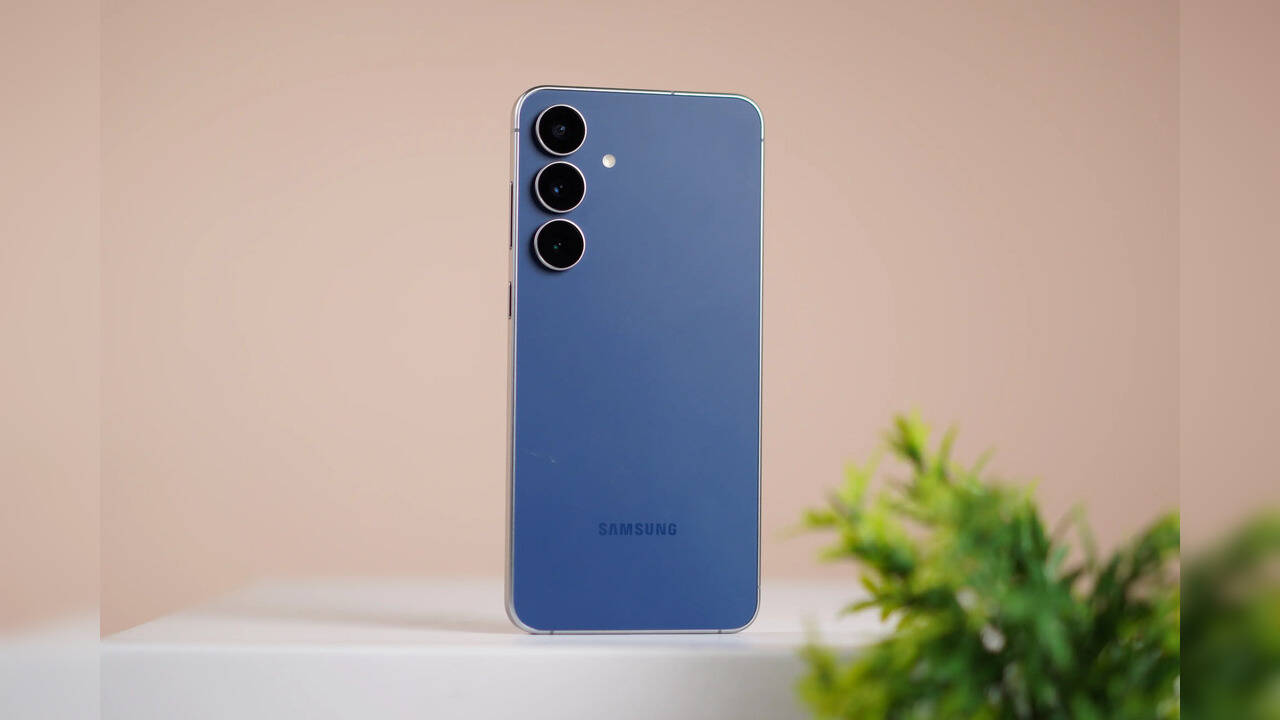
That approach puts Vivo squarely in competition with the top-tier camera phones from other manufacturers. Samsung and Apple have pushed their own camera narratives for years, and flagships like the Galaxy S26 Ultra remain benchmarks; Vivo's claims about sensor size and professional video features make the S26's position feel challenged in 2026, especially around raw imaging capabilities and optical zoom tricks. See how manufacturers are wrestling with flagship features in related coverage of the Galaxy S26 Ultra privacy display and wider ecosystem moves like cross-platform file sharing improvements that affect how people move large media files between devices Samsung’s Galaxy S26 Ultra puts a privacy screen under your thumb — with trade-offs and Galaxy S26 will get AirDrop via Quick Share.
Practical caveats
Specs and marketing can look dazzling on a spec sheet. Real-world performance will hinge on imaging software, thermal limits during extended 4K capture, battery life under heavy use, and whether Vivo's color science and LUT workflow deliver predictable results for professionals. The X300 Ultra's 35mm primary is a smart choice for reportage, but some users will miss a wider default focal length for landscapes and interiors. The teleconverters are intriguing, but add-ons historically introduce trade-offs in weight, handling, and image consistency.
The bigger picture
Vivo's move to take an Ultra model global is consequential. The X200 Ultra was an impressive but China-only experiment; bringing this hardware to international markets signals confidence that there's demand for phone-centric professional imaging. For enthusiasts and pro creators, the X300 Ultra might rewrite expectations for what a pocket camera can do. For most buyers, it will still come down to price versus how much they actually use the advanced optical and video features.
Expect hands-on reviews in the coming weeks as reviewers test the imaging pipeline end to end. Until then, the X300 series is a reminder that, at least for now, the race to one-up camera hardware in phones isn't over — it just got a very loud new entrant.