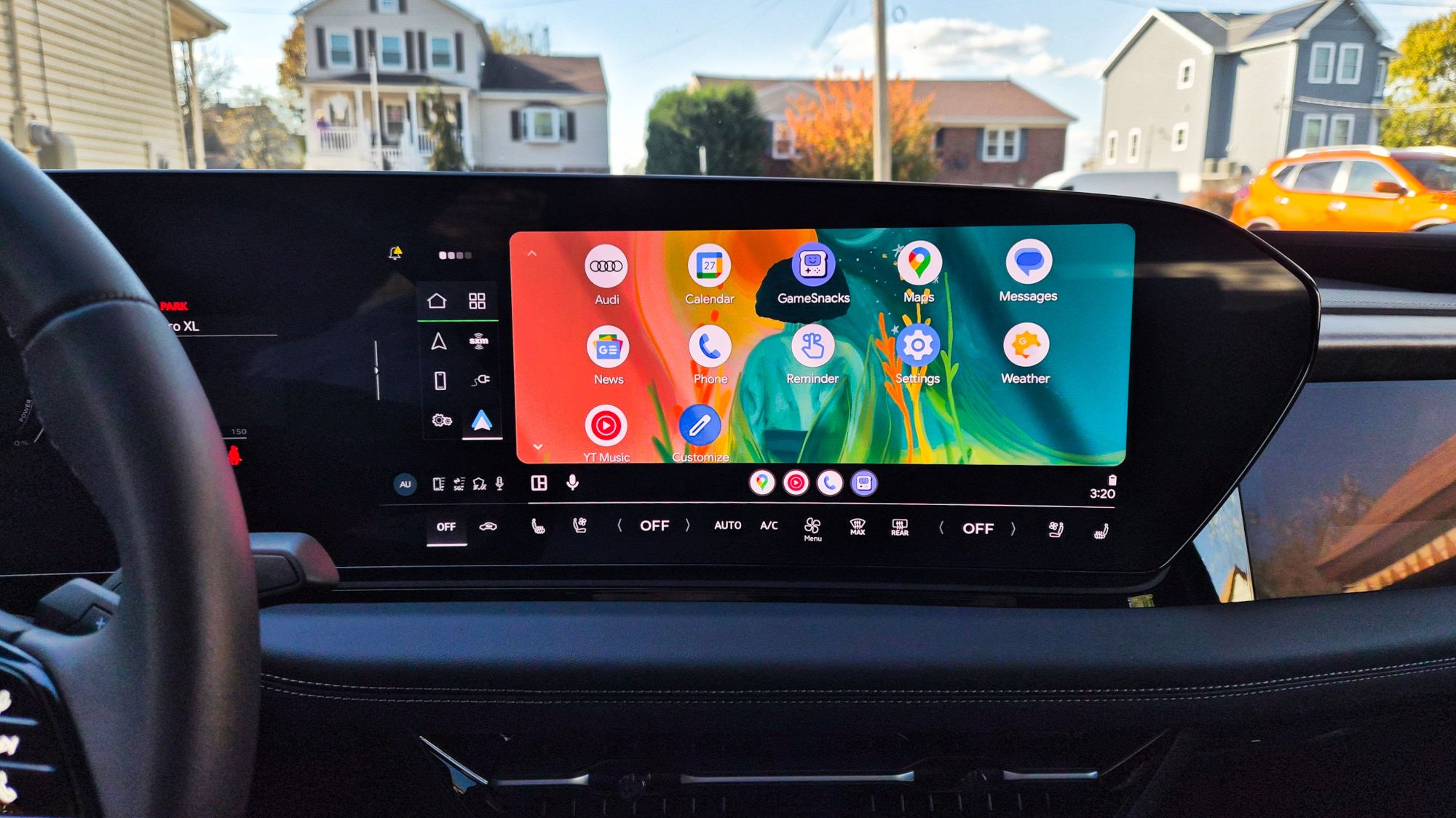
Google quietly announced something that could reshape how future cars behave: Android Automotive OS is moving beyond the infotainment screen and into the non-safety “brain” of the vehicle.
That sounds dry, but it’s big. For years, Android in cars meant maps, music and whatever widget cluttered the dash. Now Google is pitching a version called Android Automotive OS for Software-Defined Vehicles (AAOS SDV) — an open infrastructure that can manage climate, lighting, seat positions, digital keys, driver profiles and other non-safety vehicle systems. The company says it will open-source the platform later this year and is already working with partners such as Renault Group and Qualcomm.
What Google announced
The new AAOS SDV extends Android beyond the infotainment box into the car’s internal computer that governs non-safety functions. Google’s pitch is straightforward: cars are becoming “computers on wheels,” and the current landscape is fragmented. OEMs stitch together modules from dozens of suppliers, wasting time and money on plumbing instead of user experience.
With AAOS SDV, Google promises a more cohesive in-car experience, faster over-the-air updates, integrated voice features, and proactive maintenance alerts. Automakers would still be able to style the UI and own branding, Google says — but the underlying software infrastructure would be shared.
Why this matters (and why it’s controversial)
Software now shapes how a car feels as much as metal and leather. That makes it strategically important and lucrative: data about how people use climate controls, digital keys or driver profiles has commercial and competitive value.
Handing more of that control to Big Tech is a delicate ask. Automakers have long guarded vehicle software for reasons of safety, IP and revenue. Moving Android deeper into a vehicle opens questions about data collection, service licensing and who gets paid when a feature is updated or monetized.
Safety is the other hard line. Google is explicit that AAOS SDV targets non-safety systems — braking, steering, lane-keeping and airbag control remain off-limits — but drawing that line in practice can be messy. Modern features can blur the boundary (think driver-assist nudges that use cabin settings), and regulators will be watching.
What drivers might actually see
If Google’s plan works, the average driver could notice a few practical changes:
- Faster feature rollouts via over-the-air updates. Automakers wouldn’t need to rebuild whole software stacks for small improvements.
- A more consistent voice assistant across vehicle functions, not just media and navigation.
- Remote services like cabin pre-conditioning, digital key sharing and personalized driver profiles that integrate more tightly with smartphone ecosystems.
Cars already running Android Automotive — from brands such as Polestar, Volvo, Volkswagen, Rivian and others — will be the early testbeds for how cohesive that experience can become. But adoption of the SDV extension won’t be instant; some manufacturers will hesitate or build their own layers atop AAOS.
If you remember Android Auto’s history — first on phones, then projected to screens — the platform has evolved. Past issues with phone-based projections and phone compatibility show how messy in-car software ecosystems can get; for a reminder, see Android Auto's recent hiccups with devices like the Galaxy S26 and Pixel phones Android Auto's recent hiccups.
The business and competitive angle
This is as much about market positioning as software hygiene. Google wants to be the de facto provider of non-safety vehicle software in the same way Android dominates phones. That puts it in direct competition with other tech plays — notably Apple’s moves with CarPlay Ultra — and with traditional automotive suppliers who currently provide the middleware and domain controllers.
For OEMs, the promise is lower development cost and faster time-to-market. For suppliers, it’s a challenge: either adapt to a Google-led stack or risk being squeezed out. And for Google, offering an open platform that OEMs can skin is a route to broaden the Android ecosystem and potentially extend services and app distribution to vehicles. That plays into a broader strategy we’ve seen elsewhere in Google’s consumer and platform business; for example, changes in how Play Store offerings are packaged and sold are part of the company’s evolving ecosystem strategy Google Play's new moves.
Privacy and control — the hard questions
Beyond business jockeying, there are honest consumer concerns. If your car’s climate preferences, seat positions and key-sharing logs are managed by a Google platform, who controls that data? Is it anonymized, stored locally, or routed through cloud services that Google monetizes? Google’s public materials promise openness and choice, but real-world implementations will vary by automaker and region.
Regulators will also ask how the system is secured. Expanding a common OS across many vehicles can simplify patching — a plus — but it can also create a larger, shared attack surface if vulnerabilities arise. Google’s pitch about faster OTA updates is compelling, but it hinges on rigorous security processes and clear responsibilities between Google, OEMs and suppliers.
A slow shift, not an overnight takeover
Even with open-sourcing on the roadmap, AAOS SDV won’t be the default in every new car next year. Carmakers are cautious, especially when control, customer data and brand identity are at stake. Expect a gradual rollout: pilot programs, select models with deep Android integration, and plenty of negotiations over service contracts and data-sharing clauses.
Still, the direction is clear. By offering a shared software foundation for non-safety systems, Google is betting that automakers will prefer to outsource infrastructure and focus on what they see as differentiators — styling, materials and brand experiences. Whether the industry accepts that trade-off will shape how the next generation of cars feels, and who really owns the digital experience behind the wheel.